A Deaf child gets to be a musician, not a spectator
Community partners Portland Public Schools, CymaSpace, de Bastion, Inc. When 2025 to 2026 school year Where Creston School, Portland Public Schools, which houses the district's Deaf and hard-of-hearing program Role Myles de Bastion, project lead, coordinator and workshop instructor Tools SeeSound LED tubes and jam.audiolux.app
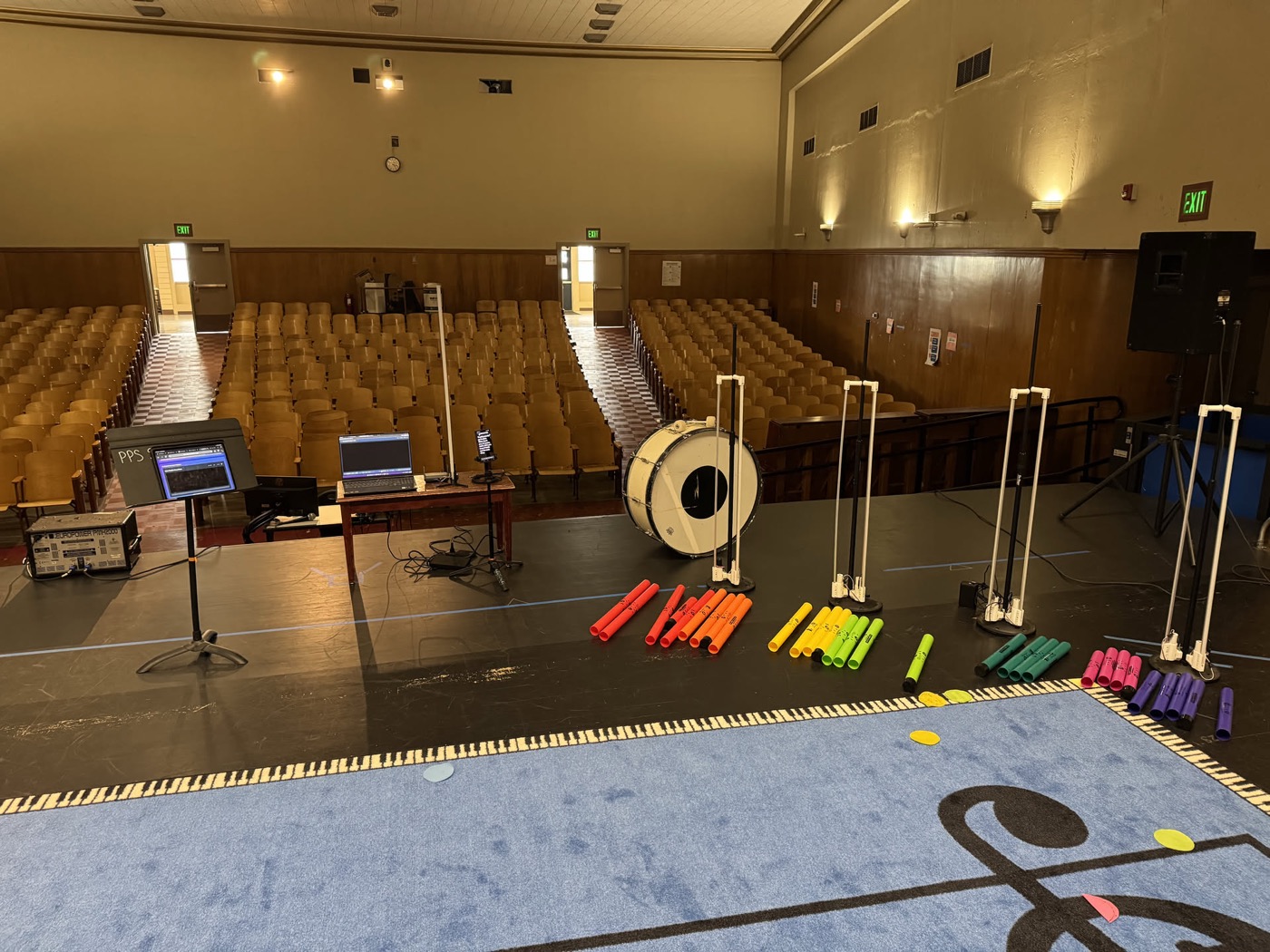
Visual-music equipment set up in an empty Creston auditorium.
2025–26school-year workshop series
4student groups per workshop, in rotation
K-5grade range served
3 hrsof ASL interpretation per workshop
What happens in the room
The workshop format used two-hour sessions on the school's early-release days. Four groups of around five students each rotated through a twenty-five minute hands-on slot, so every child had time with the instruments rather than watching from a seat.
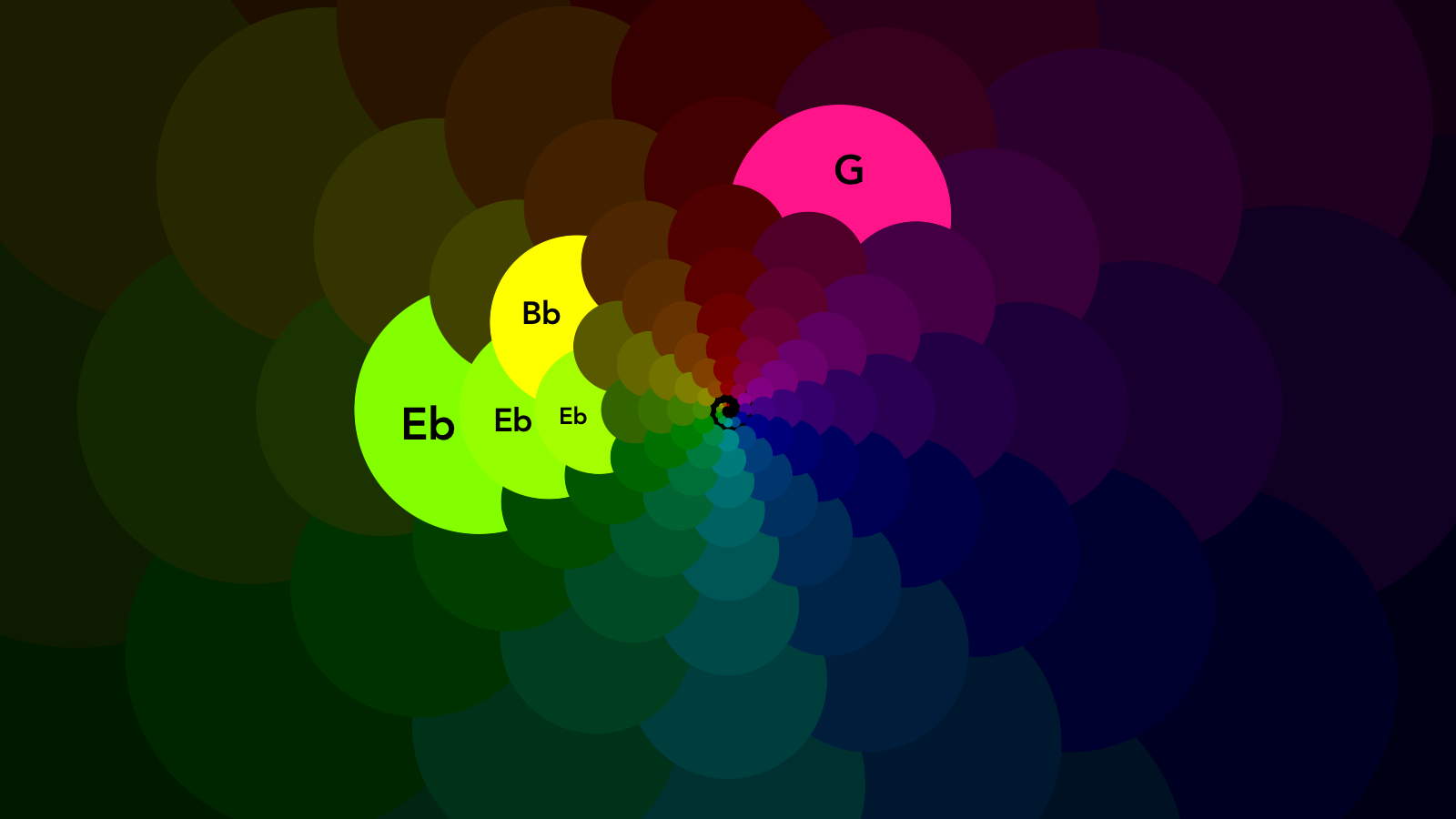
Music was taught visually. SeeSound LED tubes turn pitch and rhythm into color and movement, so a note is something you see as well as hear. jam.audiolux.app puts the same color language on a screen, letting students play together and follow each other without relying on hearing.
Instruction ran in ASL and English together, with interpreters provided by the school. The design brief was explicit: accommodate every style of communication and every level of hearing in the room, rather than making Deaf students adapt to a hearing lesson.
Technology to play. A curriculum to learn together.
Pixelboop makes musical ideas visible and playable. The Audiolux curriculum brings that visual approach into shared, hands-on music learning.
The technology
Pixelboop
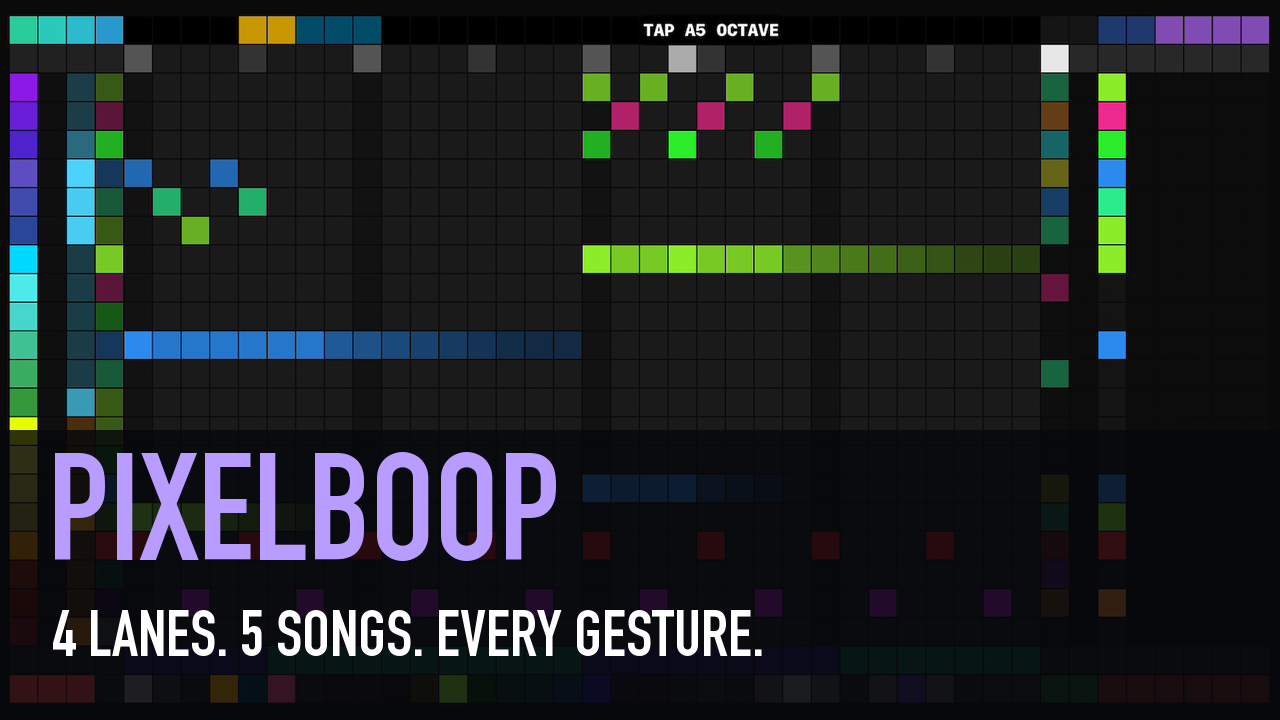
A touch-based musical instrument from de Bastion, Inc. Notes become colored pixels on a grid, and gestures turn patterns into music. Learners can explore rhythm, melody and loops through play, with a visible pattern they can follow and change.
Myles de Bastion’s visual music curriculum connects color, rhythm and hands-on instruments. Learners explore musical patterns, take turns leading and following, and make music together. Audiolux Jam provides a shared visual language on screen, alongside the workshop’s light and percussion instruments.
Each cue card connects to a hands-on activity in Audiolux’s Rhythm & Timekeeping lesson. Watch each short recording of the isometric lesson alongside its teaching prompt, then explore what students do together.
Activity 1 of 3 · Rhythm & Timekeeping
Keep a shared pulse
Teacher cue
Everyone plays the red C on each beat.
Student experience
Watch the red C notes cross the white strike line and light up on each beat.
In the room: Watch the notes reach the line, count together and strike on each beat. The card gives a simple shared instruction; the moving notes give everyone the same timing cue.
Activity 2 of 3 · Rhythm & Timekeeping
Take turns as an ensemble
Teacher cue
Sunrise: beats 1 and 5. Ocean: beats 3 and 7.
Student experience
Watch the warm and cool note groups cross the strike line in turn.
In the room: Play when your team’s colors arrive, then leave space for the other team. The card names each team’s notes; the screen shows when those notes arrive.
Activity 3 of 3 · Rhythm & Timekeeping
Play your part—and leave space
Teacher cue
Your color glows: play. No glow: count silently.
Student experience
Watch individual notes arrive at the strike line, with gaps for counting and rests.
In the room: Follow your own note and count through the gaps. The lesson turns the card’s play-or-wait cue into an ensemble pattern where rests matter as much as notes.
1 / 3
Three connected activities. Select a teacher cue to see it full size.
Keep exploring
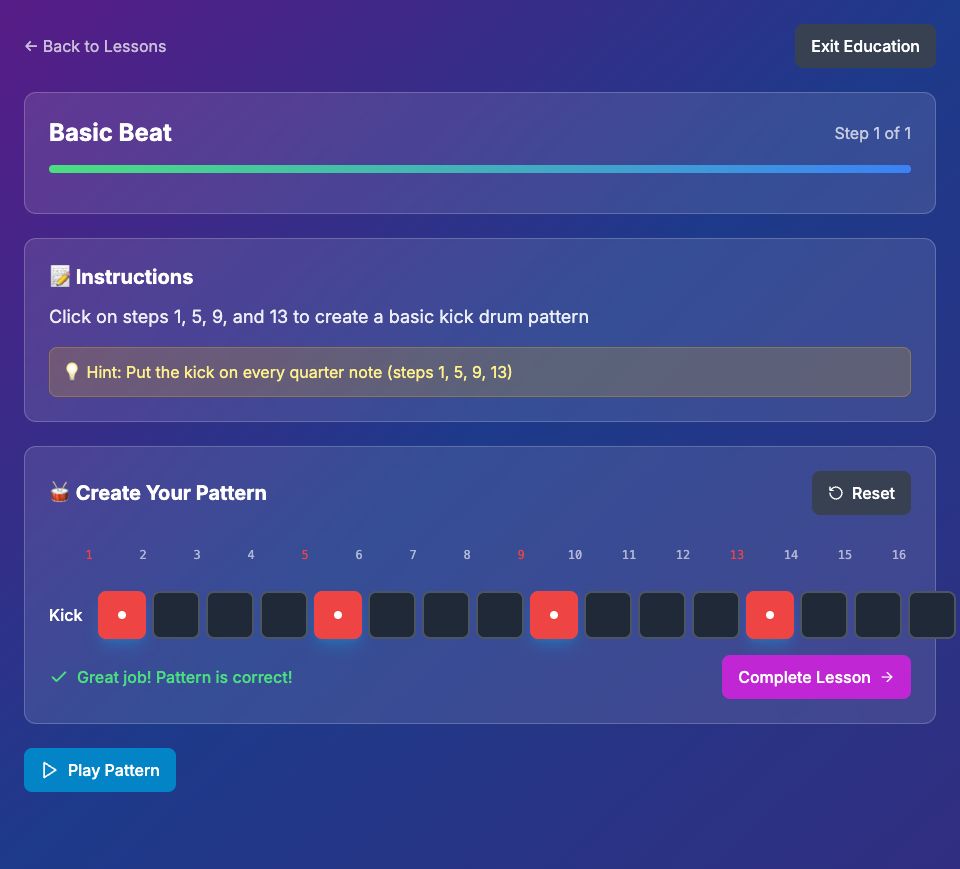
Other guided lessons include Basic Beat, Color and Pitch, and Rhythm Patterns. Learners can build a drum pattern, explore the relationship between color and pitch, and layer musical parts.
Haptic vests give a richer experience but need rental, logistics and setup time that an early-release school slot cannot carry. SeeSound tubes are portable and self-contained: charge them, bring a sound source, and the room is ready. Choosing the simpler tool made the school series feasible.
The Creston workshops grew from a partnership with CymaSpace, with Myles de Bastion leading the program through de Bastion, Inc. His experience as a Deaf musician and native sign language user shaped hands-on sessions where students could explore music through light, color and shared play.